


Introduction
Creating a website today can follow two very different paths.
CMS or Vibe Coding: which should you choose?
There is no single solution that is best for every project. A CMS such as Joomla or WordPress is particularly suitable when structured content management, user management, multiple languages and ongoing maintenance are required. Vibe Coding can instead accelerate prototyping and the development of custom solutions. In many projects, an effective approach is to integrate AI tools into a traditional web architecture.
1. Traditional methods: Use CMS such as WordPress or Joomla, predefined templates, plugins, and manual configurations.
2. Vibe Coding: Describe the site to an AI and let it generate the code (HTML, CSS, JavaScript, backend) automatically.
Let's see the pros and cons of each approach.

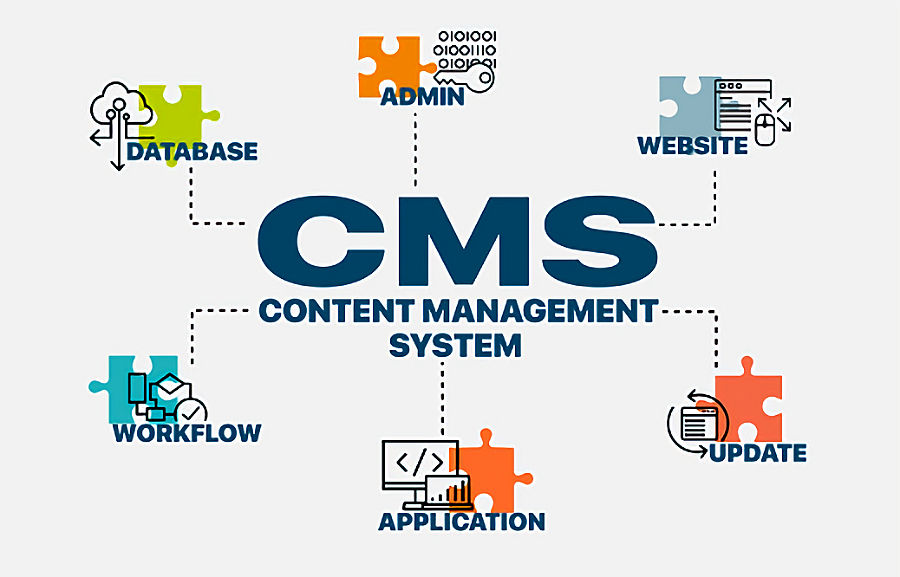
Creating websites with traditional CMS (WordPress, Joomla)
Advantages
- Mature ecosystem: WordPress and Joomla have been developed and maintained for years, with a large ecosystem of templates, extensions and active communities.
- Ease of use for non-programmers: graphical interfaces and administrative dashboards make it possible to manage content, menus and users without directly editing code.
- SEO and marketing tools: CMS platforms can be extended with tools and components dedicated to SEO, content analysis and digital marketing, simplifying website optimization.
- Wide hosting compatibility: WordPress and Joomla are supported by many hosting providers and can be installed and configured on widely available web infrastructures.
- Extensive documentation: tutorials, forums, technical documentation and online courses provide a broad knowledge base for users and developers.
Disadvantages
- Performance: performance depend on the project architecture, theme or template, extensions, hosting environment and level of optimization. A large number of components or poorly optimized code can negatively affect loading times.
- Security: like any widely used web platform, CMSs require updates, correct configuration and ongoing maintenance. Outdated CMS software or extensions can increase security risks.
- Customization: CMS platforms provide a structured foundation and can be extensively customized, but highly specific functionality or architectural changes may require dedicated development and technical expertise.
- Extension dependency: some features may depend on third-party plugins or extensions that require updates and compatibility with the CMS and can eventually become obsolete or unsupported.
- Management costs: in addition to hosting, a project may require paid extensions or templates, custom development, updates and ongoing maintenance.
Creating websites with Vibe Coding
Advantages
- Prototyping speed: Vibe Coding tools can significantly accelerate the transition from an idea to a working prototype, especially during the early stages of development.
- High customization: code can be developed and adapted to the specific requirements of a project, without necessarily being constrained by the structure of a predefined template.
- Reduced dependence on CMS plugins: a project can be developed without relying on a traditional plugin ecosystem, although it may still depend on libraries, frameworks, APIs and external services.
- Accelerated learning: AI tools can help people with limited programming experience experiment with and build prototypes using natural language, making it easier to learn through practical projects.
- Reduced development time: automation can reduce the time required for prototyping and initial development. Overall costs still depend on the tools used, hosting, required expertise and ongoing maintenance.
Disadvantages
- Code quality: AI-generated code can be inefficient, insecure, redundant or difficult to maintain, especially when it is not reviewed and tested by a professional.
- Need for technical review: if generated code is not properly reviewed, security, performance, accessibility and maintenance issues can be difficult to identify. Projects intended for production should therefore include appropriate technical review and testing.
- Debugging difficulties: when something goes wrong, identifying the cause of the problem may require technical expertise, especially in more complex projects.
- Portability: the ability to export, modify and migrate a project depends on the tool being used and the architecture adopted. Some platforms may create dependencies on proprietary environments.
- Maintenance: an AI-assisted project still requires updates, dependency management, security checks, optimization and ongoing maintenance. AI can support these activities, but it does not eliminate the need for supervision.
Comparison Chart
Aspect | Traditional CMS (WordPress/Joomla) | Vibe Coding |
|---|---|---|
Development time | Fast with existing structures and components | Very fast for prototyping and initial development |
Ease of use | High for content management | Depends on the tools and skills involved |
Customization | High, with dedicated development when needed | Very high, through custom code |
Security | Requires updates, configuration and maintenance | Depends on code quality, dependencies and review |
Performance | Depends on architecture, components, hosting and optimization | Depends on architecture and code quality |
Costs | Hosting, extensions, development and maintenance | Tools, hosting, development and maintenance |
Maintenance | System and extension updates and management | Code review, dependencies, security and updates |
Portability | Generally high, but depends on the platform and extensions | Depends on the tool and architecture used |
Learning | Relatively accessible for content management; development is more technical | Accessible for experimentation, but technical skills are important for production |
Which one to choose?
A traditional CMS can be particularly suitable when:
- You need to create a content-rich website, such as a blog, an information portal or an Ecommerce platform.
- You want a proven and structured solution, with established tools for managing content and a broad support ecosystem.
- The website needs to be managed by people without programming skills, through an interface for managing content, menus and users.
- The project requires ongoing maintenance, multiple users or languages, and frequent content updates.
Vibe Coding can be particularly suitable when:
- You want to quickly create a prototype, landing page or customized digital solution.
- You want to experiment with an idea and validate its feasibility before moving to a more structured development process.
- The project requires specific functionality or interfaces that can be developed through custom code.
- You have technical skills, or can rely on a professional who can review, test and maintain AI-generated code before and after deployment.
The third way: AI within the traditional approach
The choice is not necessarily between a CMS and Vibe Coding. AI tools can be integrated into the development process to accelerate tasks such as creating custom templates, modules and components, migrating content, writing tests, and analyzing or optimizing code.
A CMS can continue to provide a structured foundation for managing content, users and project functionality, while AI can support development, prototyping and experimentation with new solutions. In this approach, professional review and supervision remain important, especially when AI-generated code is used in production.
This approach is also related to the concept of “agentic engineering”, used by Andrej Karpathy to describe development workflows in which AI-based tools can take on an increasingly autonomous role across different stages of software development, while human supervision and responsibility remain important.
When to choose what?
- Traditional CMS
A CMS such as Joomla or WordPress can be particularly suitable for company websites, information portals, blogs, Ecommerce projects and websites where content is updated frequently. It is also useful when a project requires structured user and permission management, multiple languages, or the ability for the client to update content independently..
- Vibe Coding
Vibe Coding can be particularly useful for prototypes, landing pages, internal tools, customized interfaces and projects where an idea needs to be turned quickly into a working solution. It is especially interesting during experimentation and validation, particularly when the code can subsequently be reviewed and structured for production use.
- Hybrid approach
A hybrid approach can be suitable for customized web projects that require a structured foundation as well as specific functionality, such as configurators, dashboards, integrations with external services or custom-developed components. In these cases, a CMS can manage the structure and content, while AI tools can support development, prototyping and customization, with professional technical review and ongoing maintenance.
Conclusions
The right question is not «which technology is more modern?», but who will maintain the website over time and who will be responsible for it.
In our experience, built over more than twenty years, a hybrid approach can help develop web projects based on CMS platforms such as Joomla, Drupal, PrestaShop or WordPress, maintaining a stable and proven structure while integrating AI tools for development, customization and optimization when they provide real value.
The value therefore does not lie in choosing one technology over another, but in combining the right tools with a clear methodology, technical expertise and a well-defined understanding of the project's objectives.
Sources
- Patchstack — State of WordPress Security in 2026
https://patchstack.com/whitepaper/state-of-wordpress-security-in-2026/ - Joomla! — Project Roadmap
https://developer.joomla.org/roadmap - InfoQ — WordPress 7.0 Ships with AI Foundations in Core
https://www.infoq.com/news/2026/07/wordpress-7-ai/ - WordPress — MCP Adapter (GitHub)
https://github.com/WordPress/mcp-adapter - Veracode — 2026 GenAI Code Security Report
https://www.veracode.com/blog/2026-genai-code-security-report-ai-risk/ - The New Stack — Vibe Coding Is Passe. Agentic Engineering Is Here
https://thenewstack.io/vibe-coding-is-passe/